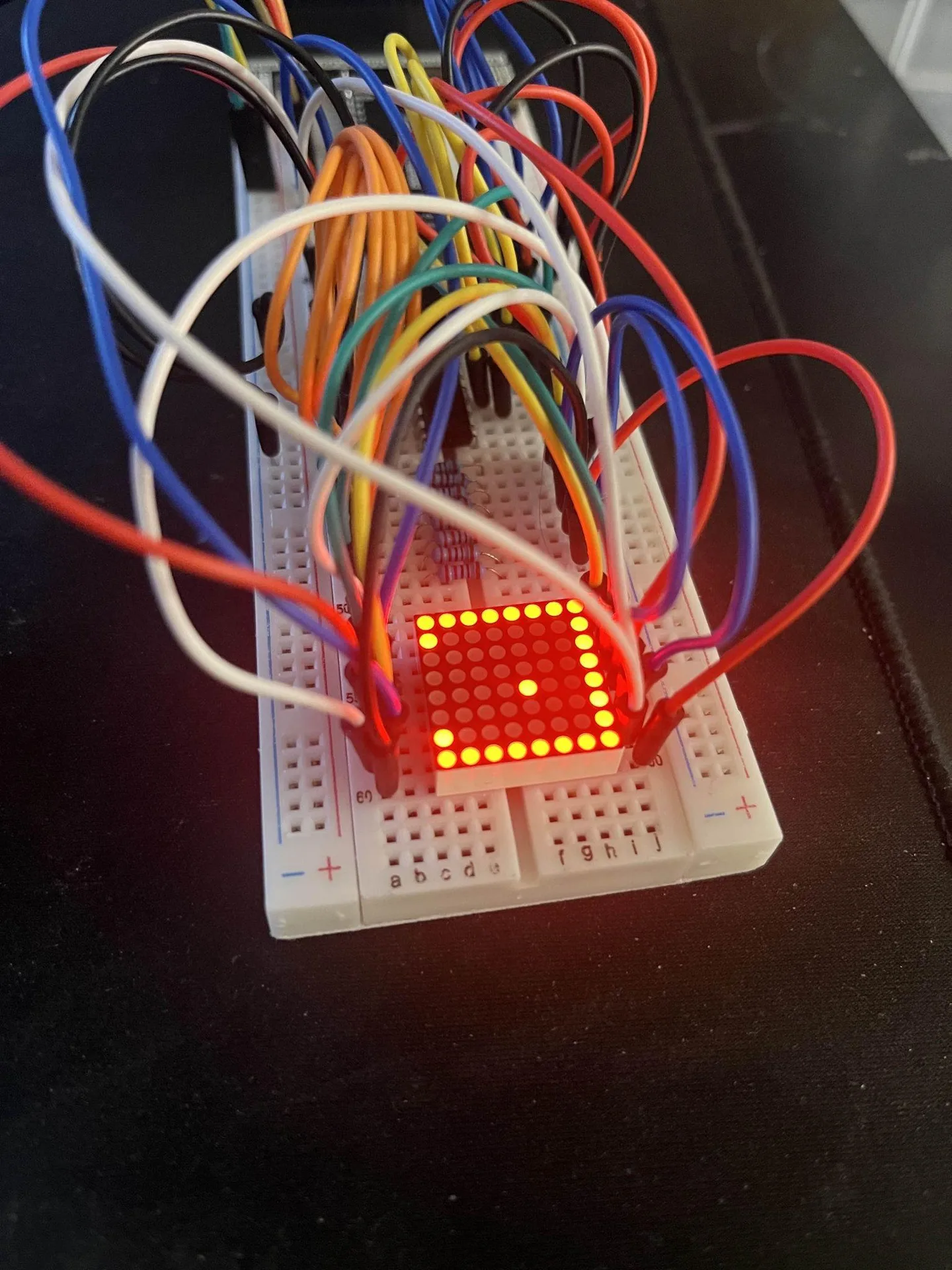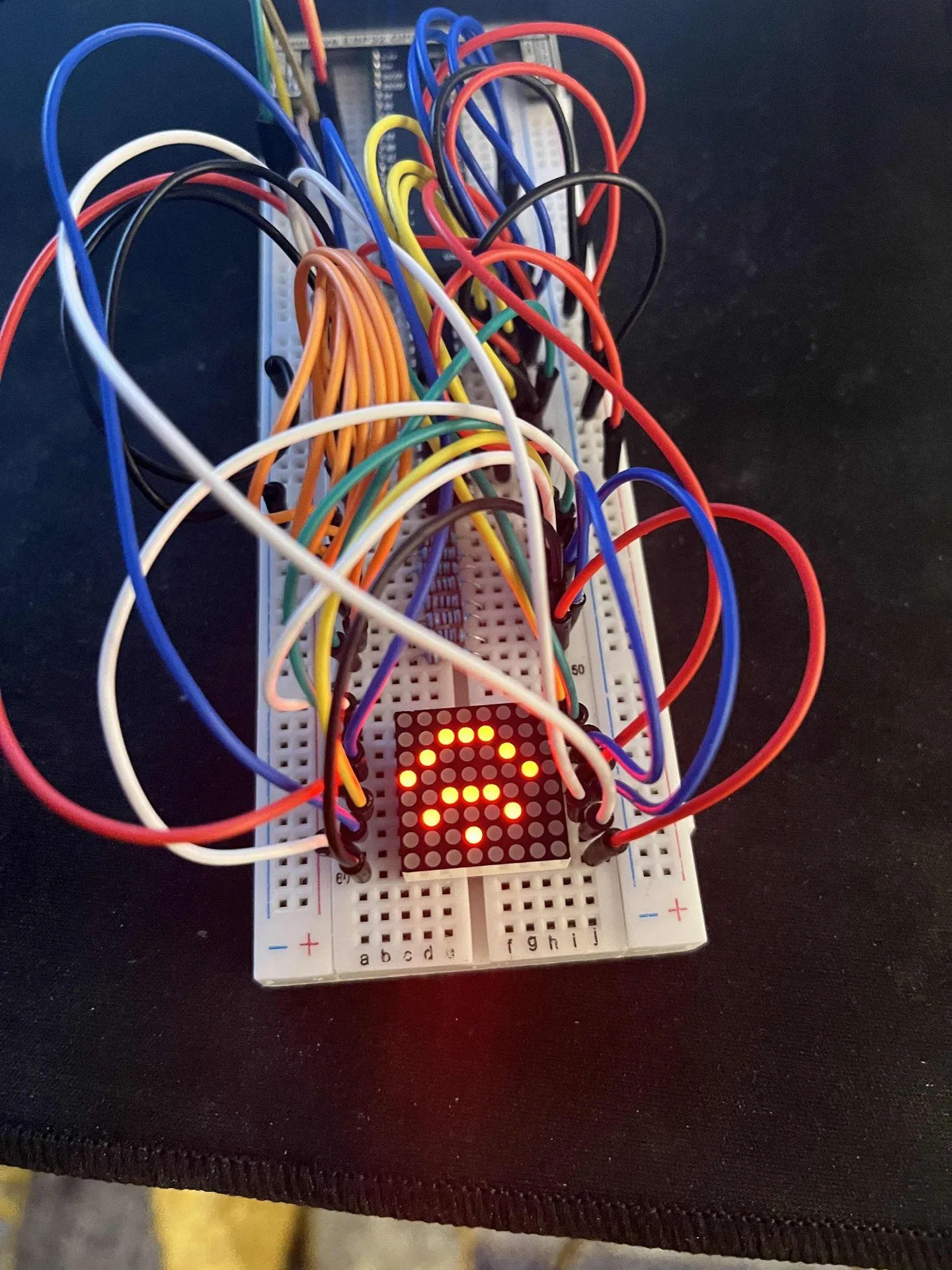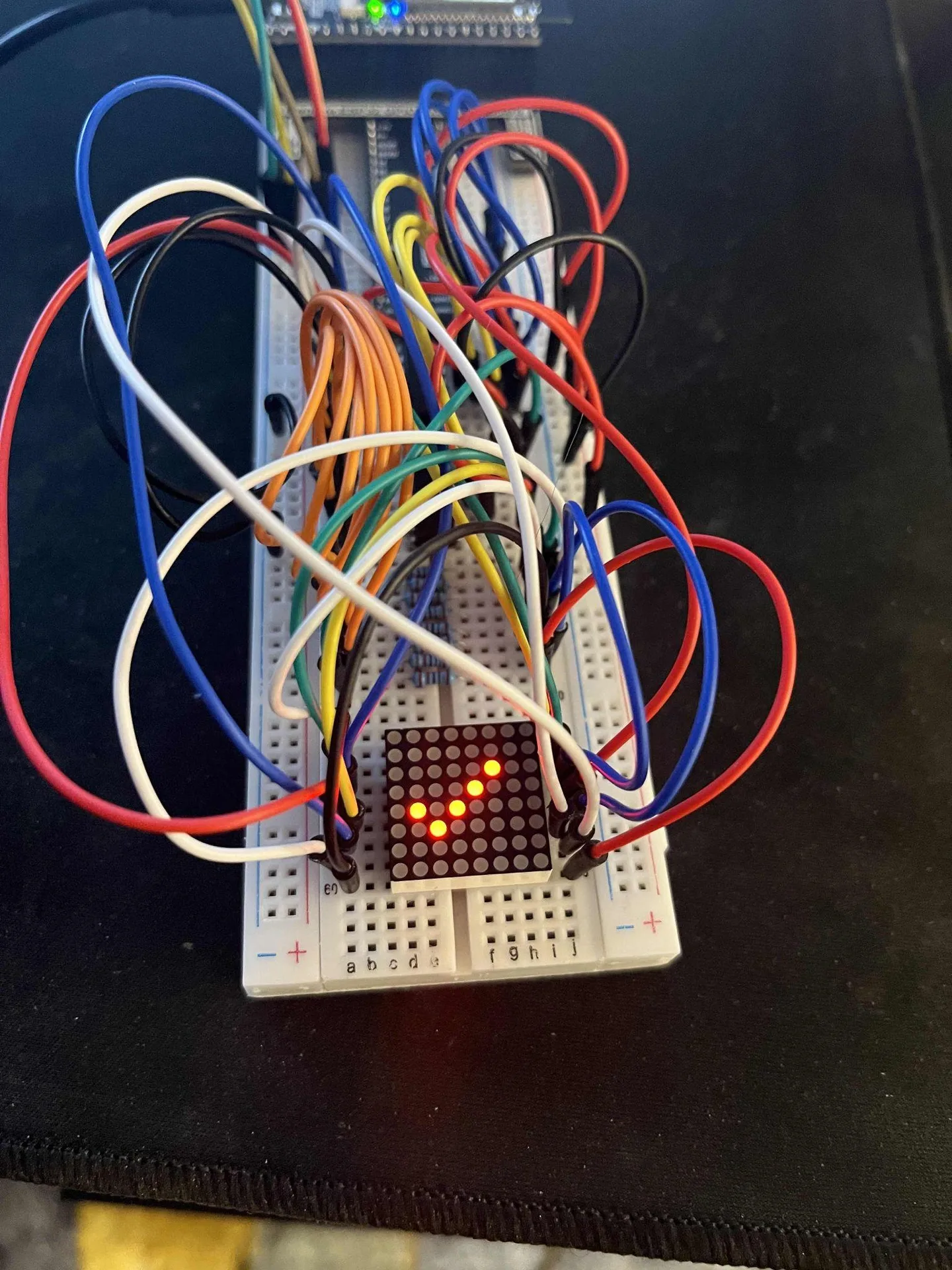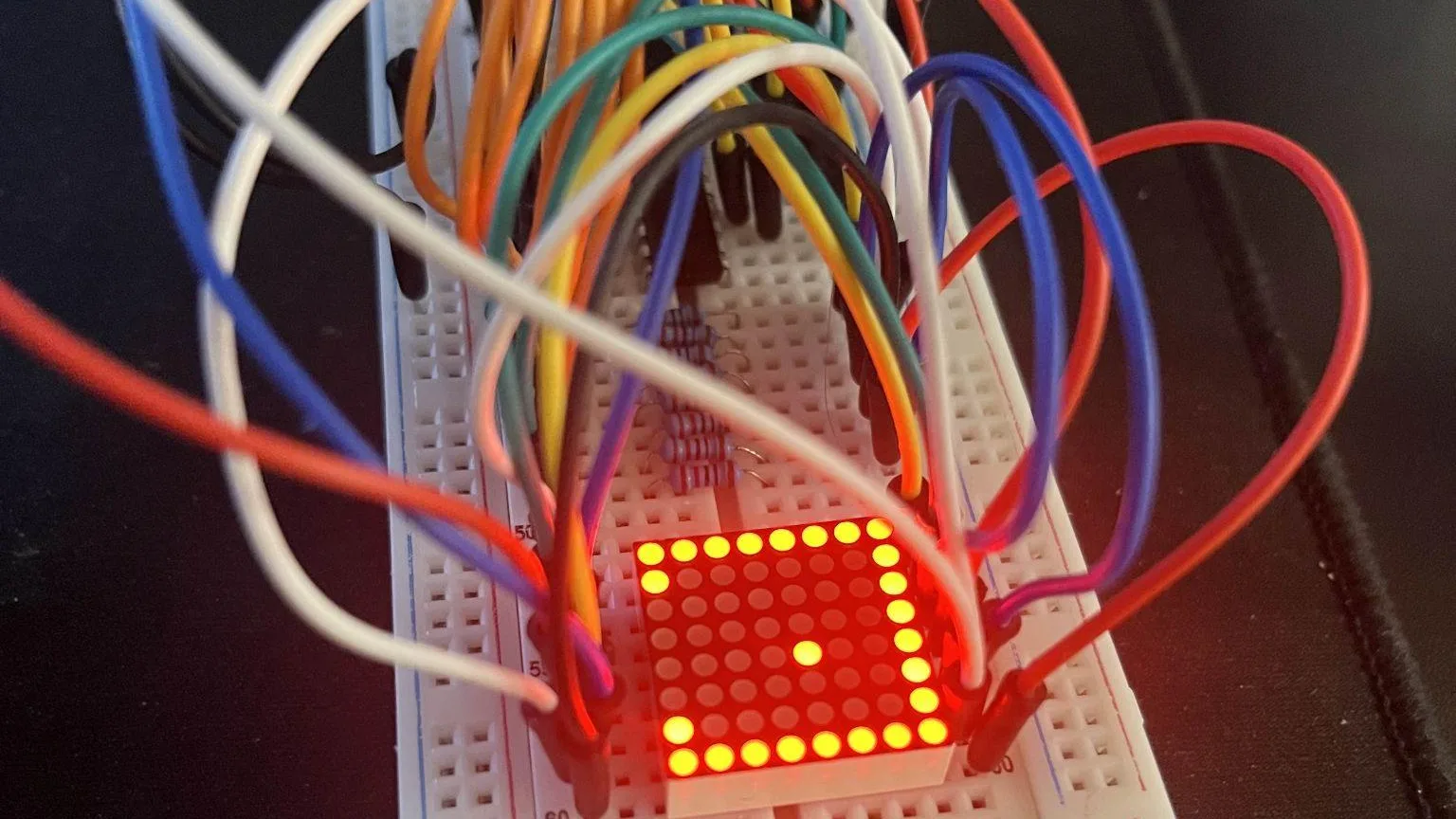
A maze game on an 8x8 LED matrix, played with a joystick and running on an ESP32, written in C with ESP-IDF. Solving the maze unlocks a Wi-Fi network that gives you a code through a captive portal, all inside a fictional escape room. This page walks through how it works, and the animation behind it is the circuit itself. Click any picture to see it larger.
It started as a school project. The component code grew from course demos by Gabriel T. St-Hilaire, the DNS redirection is adapted from the open source wifi-captive-portal-esp-idf project, and the circuit follows Freenove’s tutorials; the licences are in the repository.
Locked in a bunker
The setting is an escape room, and a fictional one: you are locked in a bunker and need the code that opens the door. Searching the room, you find a small circuit with a joystick and a tiny screen. Move the stick and a dot moves. Walk through a gap in the wall and you are in another room. It is a maze, and the way out of it is the way to the code.
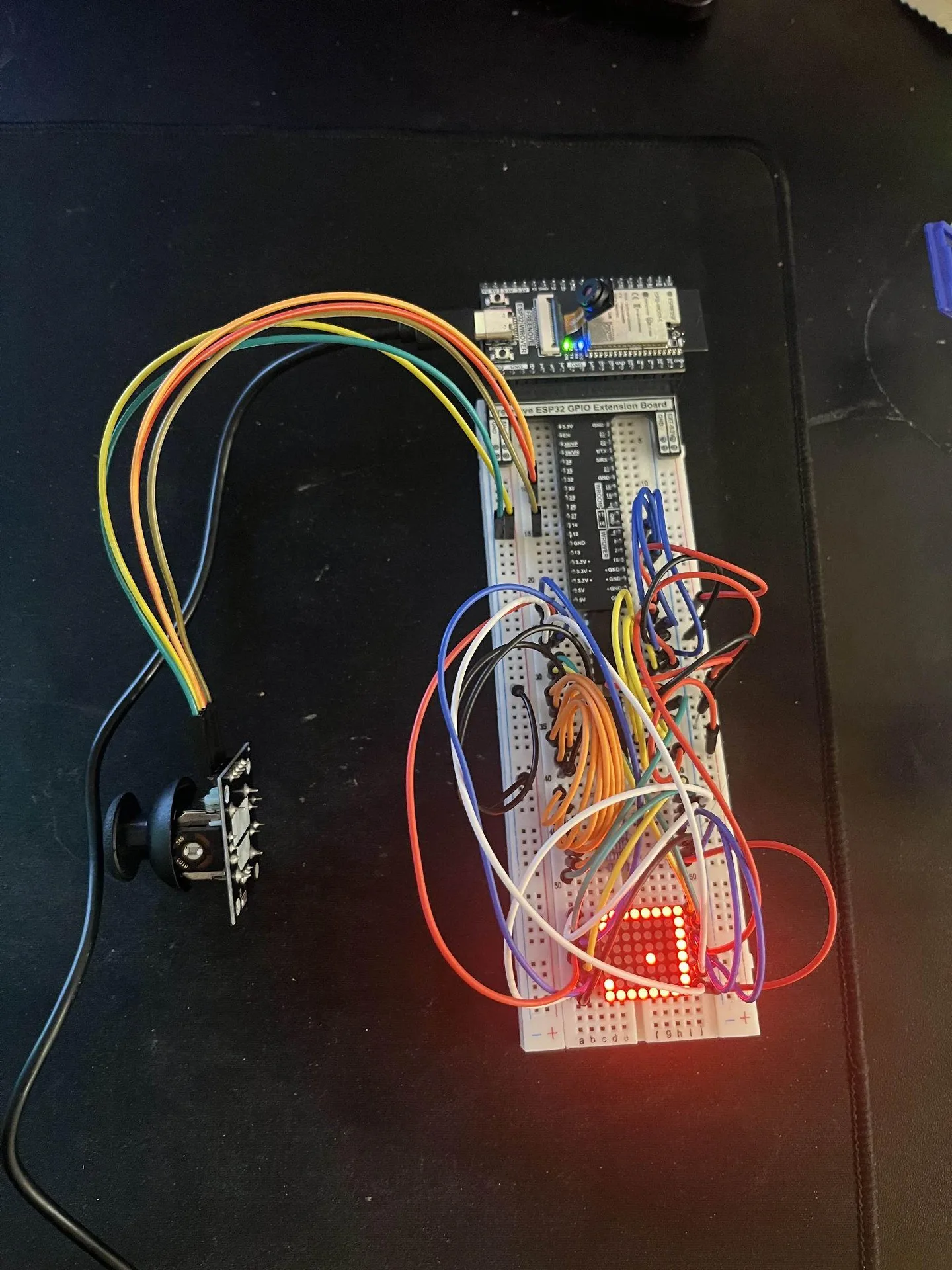
A maze on 64 LEDs
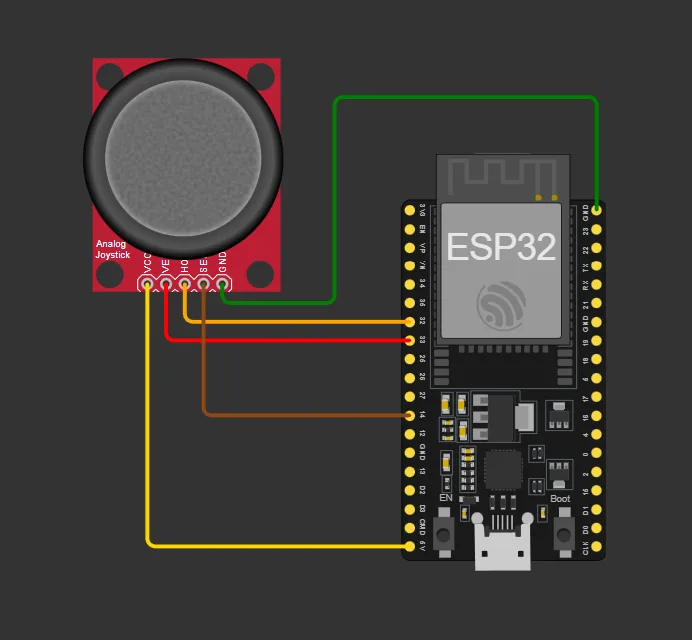
The game is a very small cousin of Adventure on the Atari 2600: rooms joined by gaps in their walls, seen one room at a time. The prototype holds nine rooms of 8 by 8 with one forced path, but the engine is modular, so procedural generation can be added later. The joystick's two analog axes are read by the ESP32's analog to digital converter and mapped to -1, 0 or 1, and its button restarts the game. When the player walks out of the last room, the game is over.
Bits in, light out
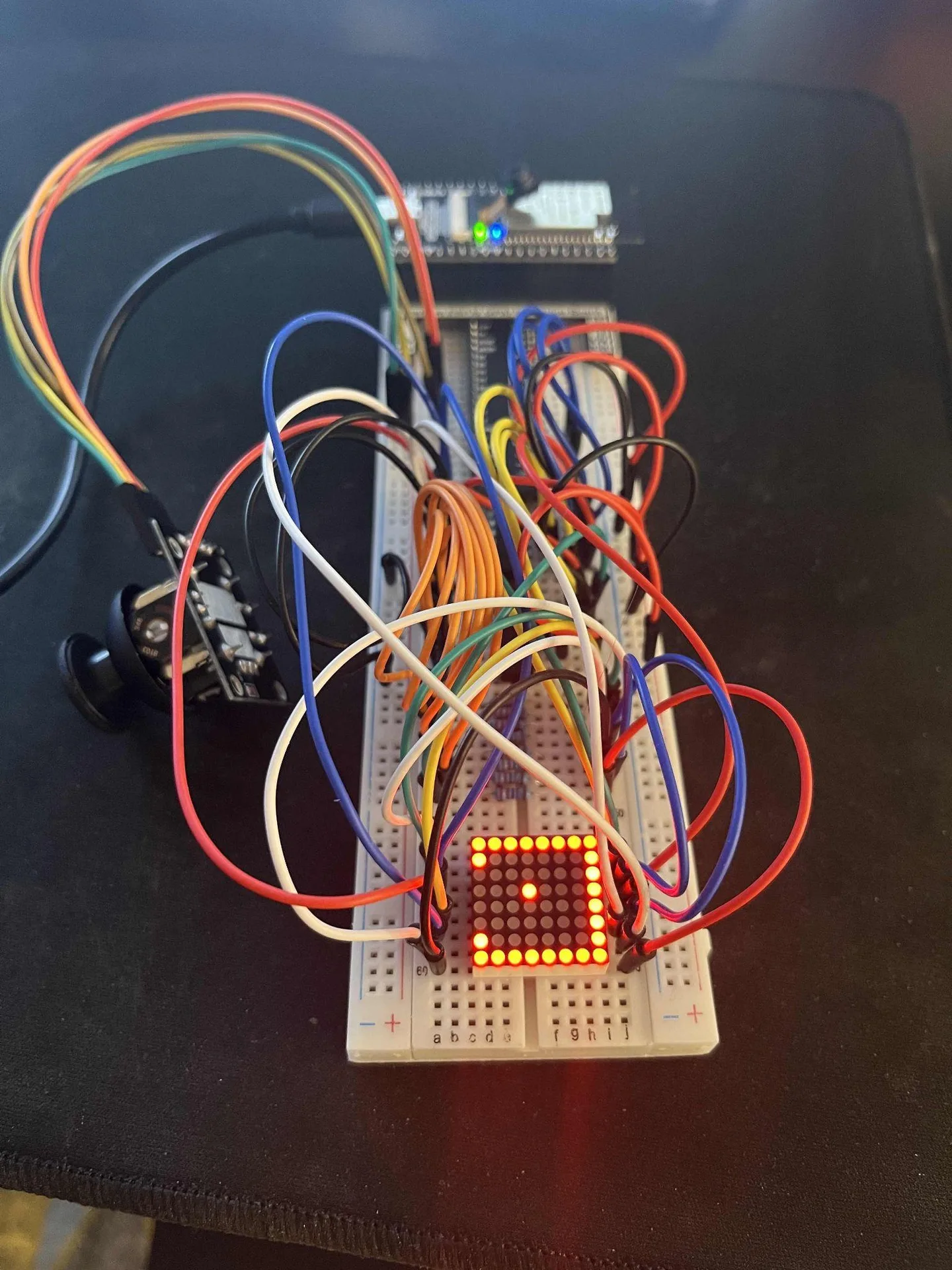
An 8x8 matrix needs 16 control lines, and I give it three of the ESP32's pins. Two 74HC595 shift registers turn that serial stream into parallel outputs, one for the rows and one for the columns. For each byte I put one bit at a time on the data pin with a shift and a mask, then pulse the clock so the register takes it in, and finally pulse the latch so all eight outputs change together. It is the most low-level part of the project, and the one I enjoyed the most.
Faster than the eye
Each LED has its positive side on a row and its negative side on a column, so only one column can be lit at any moment. A hardware timer lights each column for a millisecond, one after the other. The game itself only writes the picture into an 8 byte buffer, protected by a mutex because the timer and the game both touch it. Your eye does the rest: the whole picture looks lit at once.
A network that opens when you win
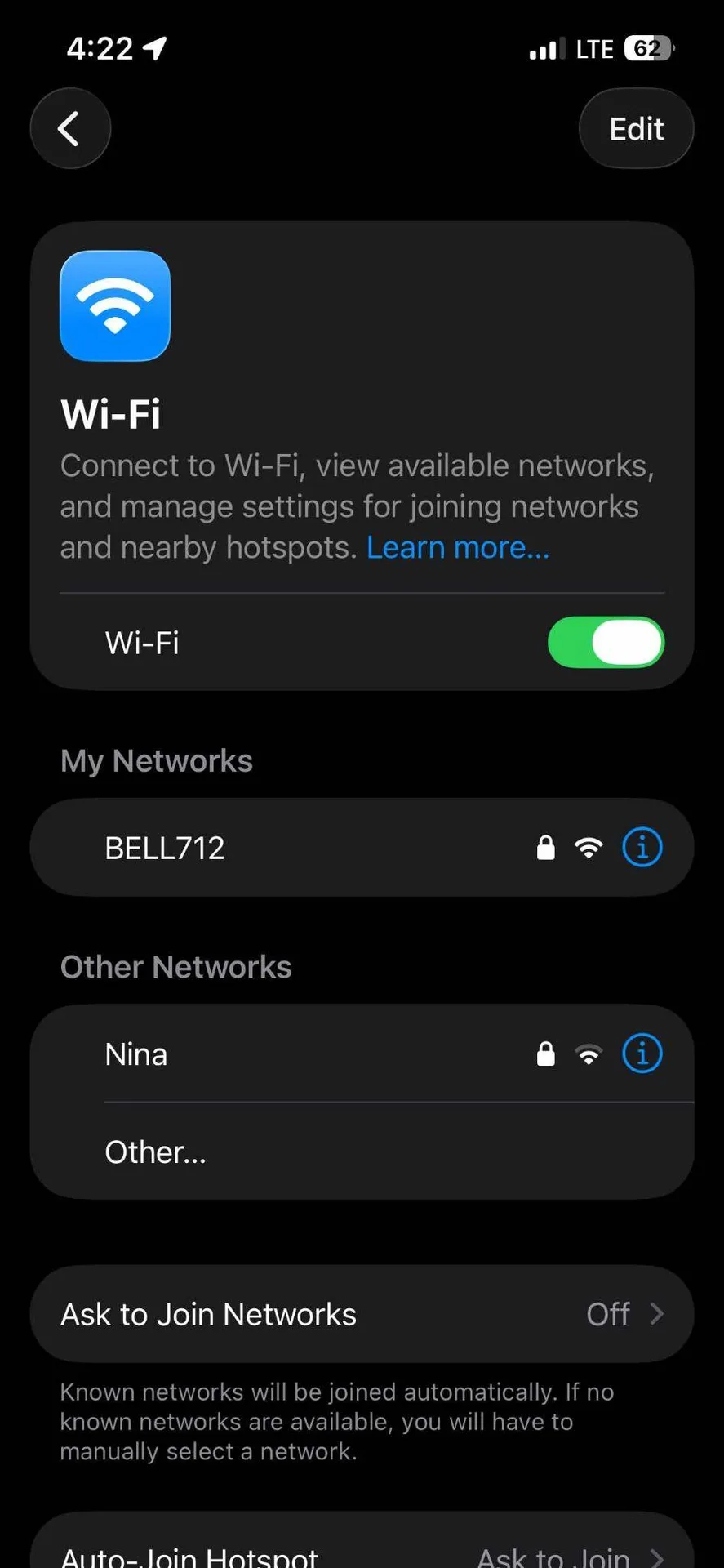
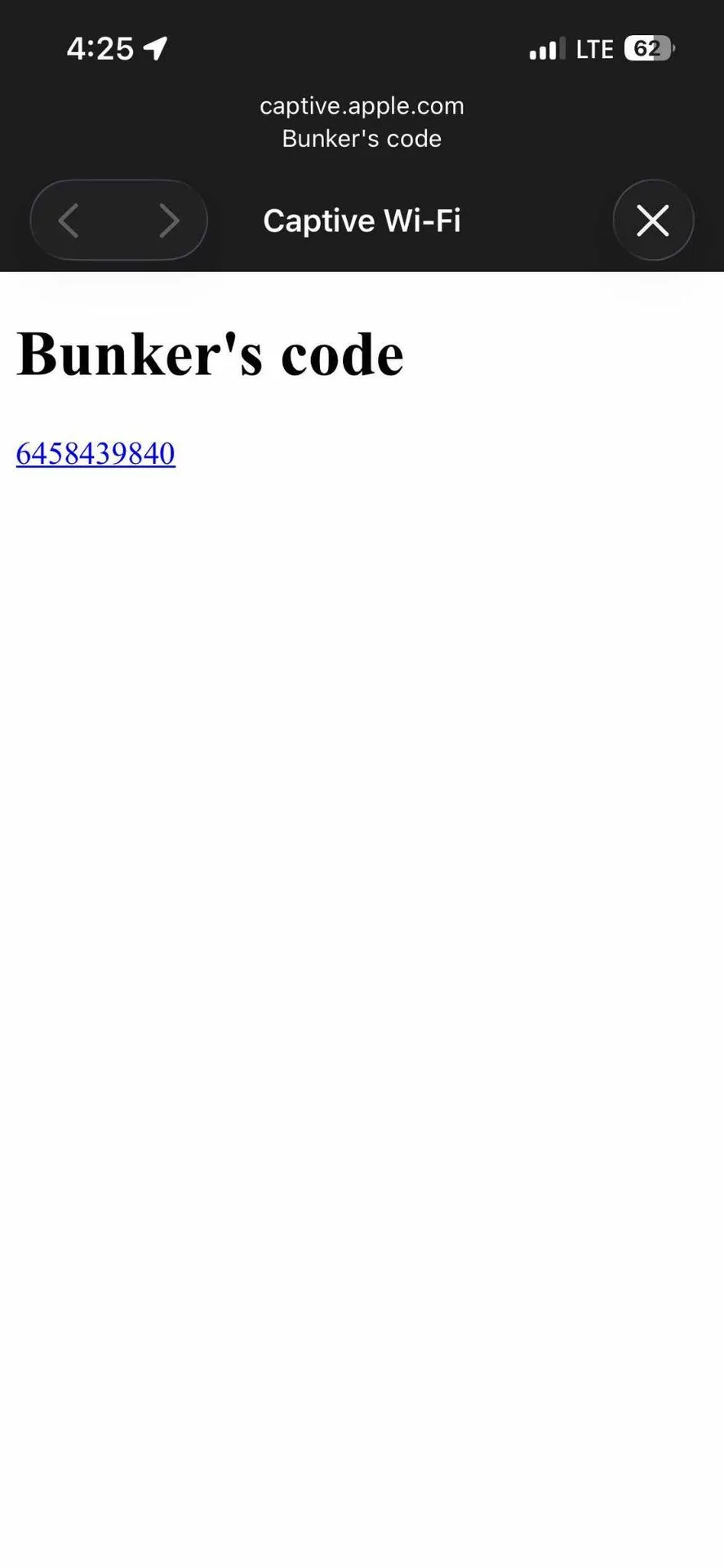
When the game starts, the ESP32 runs a hidden Wi-Fi access point called "Bunker's code" that accepts no connection, next to an HTTP server and a DNS server. There is no internet: it is a closed network of two devices. Finding the exit makes the network visible and lets exactly one device in, while the matrix plays a Wi-Fi symbol. Once a phone connects, a check mark replaces it. The DNS server answers every name with the ESP32's own address, so the phone's system opens its captive portal popup, asks for the page and shows the code.
The weak spot
A real escape room would have a flaw: the next team, waiting outside, could see the network and join it before playing. Limiting the access point to one connection lowers the odds, and a room that blocks radio waves would remove the problem. That one is out of my hands, but I would rather name the limit than hide it.
Watch it run
A short demo: the player crosses the rooms with the joystick, finds the exit, and the matrix switches to the Wi-Fi symbol.
What it taught me
This project was my way into IoT and computer engineering. A small chip has no forgiving runtime: three pins, a one millisecond tick, eight bytes of display memory. Every bit and every microsecond is a decision, and that sharpened my C more than any exercise did. It also made me hungrier for systems programming. I have always been curious about how computers really work under the hood, and here I touched that layer with my own hands. I want to go deeper.
See the code on GitHub →On the breadboard